Plan a Sporting Season Around Three Questions
Plan a sporting season around three questions to clarify your role, season priorities and decision points before commitments become difficult to change.
At the club registration desk, the form asks Maya to choose a team role before she has seen the fixture list. She wants to play, but she also wants to know what the season will ask of her. To plan a sporting season, she starts by deciding what she is joining for, which commitments she can accept and what information she needs before choosing a role.
Maya is an invented example. Her planning problem is not how to fit practice into every week; it is how to make a season-level decision when fixtures, team duties and personal priorities are still coming into focus.
Set a season priority before choosing a role
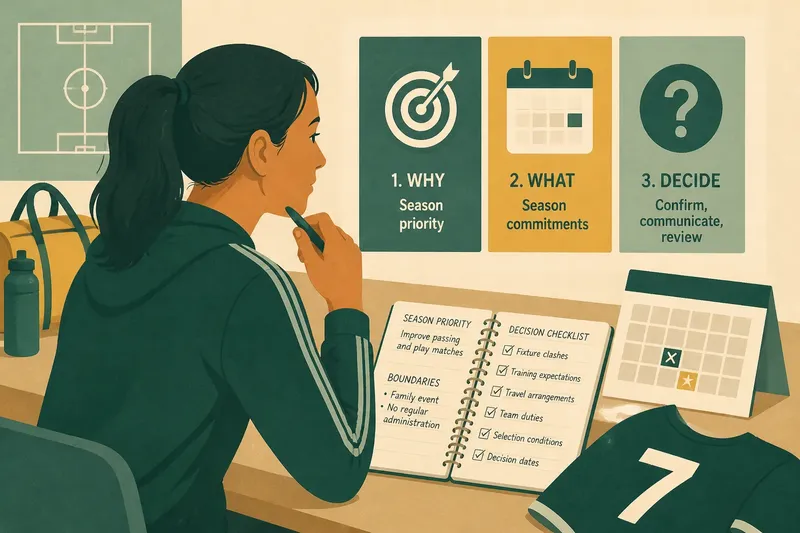
Write down the main reason you want to take part this season. It might be learning a particular position, contributing to a team, enjoying competition or being part of the club. Choose one priority to guide trade-offs, rather than treating every possible benefit as equally important.
Next, identify what you are not willing to trade away for that priority. This could be a family commitment, a role at work or a boundary around travel. Naming the boundary now gives you a way to assess invitations that sound appealing but carry extra obligations.
Say you want to improve your passing and would like to play matches, but you cannot take on regular team administration. If the club offers you a playing place that includes an organising duty, ask whether the duty can be shared or whether another role better fits your stated priority. The decision is about the whole role, not just its most attractive part.
Check the season’s commitments before you agree
Ask the coach or organiser for the current fixture list, expected training pattern, registration requirements and any team duties attached to participation. If a detail is not settled, mark it as unknown rather than assuming it will work out. Club rules and expectations can differ, so confirm the relevant terms directly.
Use this decision list before accepting a place or role. Each item links an observation to a next action:
- Fixture clashes: Check the published dates against commitments you cannot move. If several important dates conflict, then ask about a different level of involvement; if the clashes are limited or uncertain, then confirm which fixtures need an early decision.
- Training expectations: Check which sessions are required and which are optional. If required sessions do not fit your circumstances, then ask whether another role or team is available; if they do fit, then record the pattern you are accepting.
- Travel arrangements: Check the venues and how you would get to them. If travel depends on help that is not yet agreed, then ask about transport options before committing; if you can arrange it independently, then include the journey in your decision.
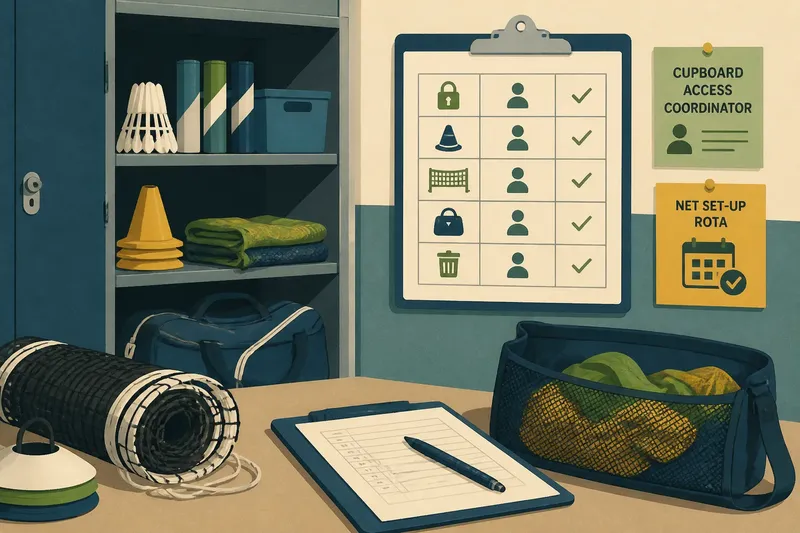
- Team duties: Check for tasks such as equipment, match-day setup or administration. If a duty is unclear or too large for you to accept, then ask how it is shared; if its scope is clear and acceptable, then confirm your understanding with the organiser.
- Selection conditions: Check whether your chosen role has attendance, registration or eligibility requirements. If you cannot meet a stated condition, then ask what alternative participation is allowed; if you can meet it, then keep the requirement with your season notes.
- Decision dates: Check when the club needs your answer and whether the commitment can be revisited. If the deadline comes before key details are available, then request clarification or more time; if the terms are clear, then make and communicate your choice.
Keep the answers together in a calendar note or document, including the name of the person who confirmed any uncertain detail. That gives you a record of the agreement to refer to when team plans change.
Make a season decision with incomplete information
You may need to decide before every fixture or team arrangement is final. Separate what is confirmed from what remains open, then ask which unknowns could change your choice. A vague possibility of change may be manageable; an unresolved requirement that would rule out your role deserves an answer first.
Imagine Maya receives a hypothetical fixture list showing a Saturday match that conflicts with a family event, while the club has not yet confirmed whether players must attend every match. She checks the registration note, messages the organiser and learns that attendance varies by role, but the selected team expects players to report unavailability early. She tells the organiser she can accept the role if the conflicting date can be recorded as unavailable; the organiser confirms this is permitted, so Maya accepts and flags that fixture. The observable result is a clear selection condition and a known exception, rather than an assumption that she can attend.
How should you handle common season decisions?
What if the fixture list is not final?
Ask when the club expects to confirm it and which current dates are most likely to affect your role. Make your decision conditional on the unresolved detail if the organiser allows that; otherwise, decide whether the uncertainty is acceptable before registering.
Should I accept a team duty as well as playing?
Ask what the duty involves, how often it arises and whether it can be shared. Accept it only if its scope fits your season priority and boundaries; otherwise, offer a different contribution or decline the extra responsibility.
What if my preferred role is unavailable?
Ask what alternatives the club can offer and compare them with the priority you set for the season. If an alternative still serves that priority, consider it; if not, ask whether a different team or a later opportunity is possible.
When should I tell the club my decision?
Respond by the club’s stated deadline, or contact the organiser before it if you need missing information. State the role you are accepting, any confirmed limits and any detail still awaiting agreement.
Keep the agreement clear as the season takes shape
Once you have chosen, send a short message summarising the role, the commitments you accepted and any agreed exception. Ask the organiser to correct anything you have misunderstood. This keeps both sides working from the same arrangement without turning an early choice into a promise to take on more.
To plan a sporting season with fewer avoidable surprises, keep the priority, confirmed conditions and open questions in one place. When the club changes a fixture or duty, check whether that change affects your original decision before agreeing to it.