Your First Club Visit: Three Things to Notice Before You Join
A first club visit can reveal how a session runs, how newcomers are welcomed and what to ask before you decide whether to return.

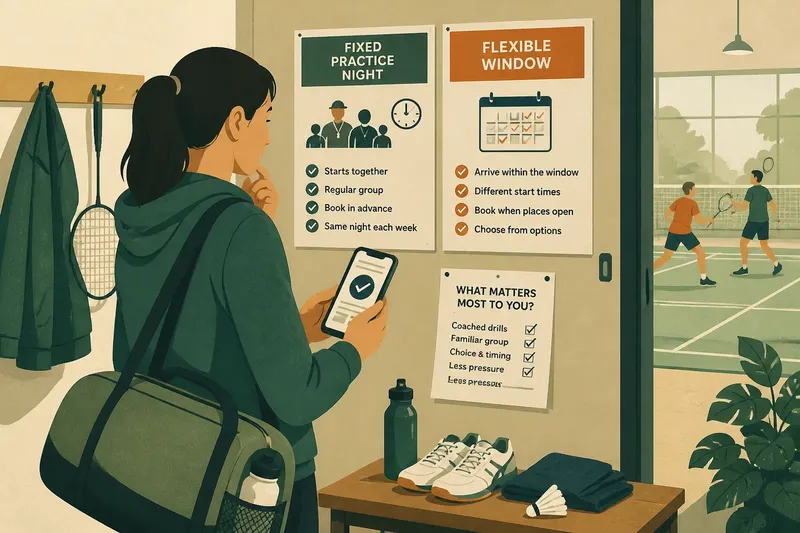
You arrive at a badminton hall with your shoes in one hand and no clear idea where to put your bag. A first club visit is a chance to notice how the session works in practice, not just how it sounds in a message or on a club page. Keep your attention on three things: the session structure, the welcome and the practical questions you can ask.
Notice how the session is put together
Watch what happens between arrival and the first game or drill. Is there a clear meeting point? Does someone explain how players are grouped, or do regulars simply start while newcomers wait for a cue? A session can be informal and still be easy to follow.
Look for the shape of the activity rather than judging its pace. In a running group, that might mean a warm-up followed by smaller groups at different paces. In a climbing club, it could mean a short briefing before members choose routes. Notice whether you can tell what to do next without having to interrupt repeatedly.
Check how the activity accommodates different experience levels. A coach or organiser might offer a simpler drill, rotate partners, or explain a rule before play begins. If the session is designed for experienced members, that is useful to know; it may simply be a poor fit for your first visit.
- Where do newcomers gather, and who gives the opening instructions?
- How are players or groups matched?
- Is there a warm-up, briefing or chance to ask about the activity?
- What happens if someone needs a pause or does not know a rule?
- Can you identify how the session ends and where members go afterwards?
Say you visit a beginners’ tennis evening and see players waiting for courts without knowing the rotation. You ask the organiser how turns are assigned; they explain the arrangement and point out where the next group waits. The observable result is simple: you can follow the session without guessing, and you have a clearer basis for deciding whether its pace suits you.
Notice how the welcome works
A friendly greeting helps, but the useful sign is whether someone makes your next move clear. Do they introduce you to the person leading the session, show you where to leave your coat, or explain how to join a group? Small practical gestures can make an unfamiliar venue easier to read.
Pay attention to how members speak to one another, not only to you. Are instructions given without ridicule? Do people make room for a new participant, or do conversations and routines leave you standing at the edge? One quiet moment is not enough to judge a whole club, but it can prompt a sensible question.
You do not need to perform confidence to belong. It is reasonable to say, “I’m new—could you show me where to start?” Notice the response. A helpful answer may be brief; what matters is whether you receive usable direction rather than being made to feel foolish for asking.
Also notice whether the club’s description matches the session you see. A welcoming group can still be too competitive, too casual or focused on a different activity than you want. Your first visit is for assessing fit, not proving that you can keep up.
Ask the practical questions that affect a return
Use a quiet moment before or after the activity to ask about the details that would shape another visit. Keep questions specific, and ask the organiser or coach rather than relying on a guess from another newcomer.
- “Is this session suitable for someone at my current level?”
- “What should I bring next time, and is any equipment available to borrow?”
- “How do I let the club know I’m coming, or find out if a session changes?”
- “Is there a separate fee, registration or membership process before I can take part again?”
- “Who should I contact if I have a question before the next session?”
Listen for a clear answer and a clear next action. If equipment is required, find out what kind and whether the club has guidance for choosing it. If you need to register, ask where the information is kept. For matters governed by the venue, equipment label, manufacturer instructions or local rules, check those requirements with the responsible person.
You can also ask what a regular session typically involves, without asking the club to promise a particular experience. A straightforward explanation gives you something concrete to compare with your own preferences: more instruction, more social play, a quieter pace or a stronger competitive focus.
What should you do if you feel out of place?
What if I arrive and nobody is waiting for newcomers?
Ask the person running the session or a member who appears to be organising equipment where new participants should go. If you cannot identify anyone responsible, contact the club using its listed details before deciding that the whole group is unwelcoming.
Should I join in if I do not know the rules?
Ask for a quick explanation before play or request to watch a turn first. If the activity is too advanced to follow, check whether the club has a beginner session rather than trying to conceal your uncertainty.
What should I do if I cannot borrow the right equipment?
Ask whether there is a suitable loan option or another session where you can try the activity with club equipment. Do not assume a substitute is appropriate; follow the organiser’s guidance and any relevant equipment instructions.
How can I decide whether to return?
Compare what you noticed with what you want from taking part: a clear session, a workable welcome and practical answers that make the next visit manageable. If one part was unclear, ask about it before ruling the club out; if the overall fit still feels wrong, it is reasonable to try another group.
Make the next decision while details are fresh
After leaving, note one thing that worked, one point you still need clarified and the next action you would take. Keep the notes factual: “coach explained court rotation” is more useful than “good atmosphere” when you are comparing clubs later.
Then choose a specific next move. You might message the organiser about a beginner session, check what equipment to bring or decide to visit a different club. A first club visit does not commit you to joining; it gives you practical evidence about whether the activity and the people around it suit the way you want to participate.