Returning to Sport After a Break Without Feeling Behind
Returning to sport after a break can feel awkward. Use a simple plan to reconnect with your club, settle first-session nerves and resume at a manageable pace.

You stand outside the sports hall with your kit bag, wondering whether everyone will ask where you have been. Returning to sport after a break can feel harder than sending the message that you are coming back. The first useful move is to make that return ordinary, not to prove that the time away did not matter.
Separate the gap from the decision to return
An absence can bring practical worries: you may have missed a change to the session, forgotten a piece of kit or lost touch with the group. It can also stir up embarrassment, especially if you think teammates will judge your commitment. Naming the specific concern makes it easier to address than treating the whole return as one large test.
You do not owe the club a detailed account of ordinary life interruptions. A simple “I had to take a break, but I’m glad to be back” is enough if you want to explain. If you had made a commitment that affects the team, contact the coach or organiser directly and deal with that particular issue.
Make the first visit socially easier
Choose one person who is likely to be there and send a short message before the session. Ask whether the usual venue and activity are still on, and say you plan to come along. A familiar greeting at the entrance can remove the awkward moment of deciding where to stand or whom to approach.
If you have lost the club contact details, check its website or group chat, then message the named organiser rather than sending a general apology to everyone. You can ask what to bring and whether the session is suitable for someone returning. This gives the organiser a clear question to answer.
- If you are unsure the session is running, check the club calendar or message the organiser; if there is no reply, choose a confirmed session rather than travelling on a guess.
- If you are worried about walking in alone, ask a teammate to meet you at the entrance; if that is not possible, arrive early enough to introduce yourself to the coach before the group starts.
- If you cannot remember what equipment is needed, check the club’s kit list; if an item is unavailable, ask whether there is a suitable loan option before setting off.
- If you expect questions about your absence, prepare one brief sentence; if someone presses for details, say you would rather keep it private and turn the conversation back to the session.
- If the usual group feels too daunting, ask about a quieter session or beginner-friendly activity; if neither is available, attend with a friend or arrange a short check-in with the organiser.
- If you are unsure how to join the warm-up, ask the coach where to start; if you miss the explanation, wait for the next pause and request the current drill rather than guessing.
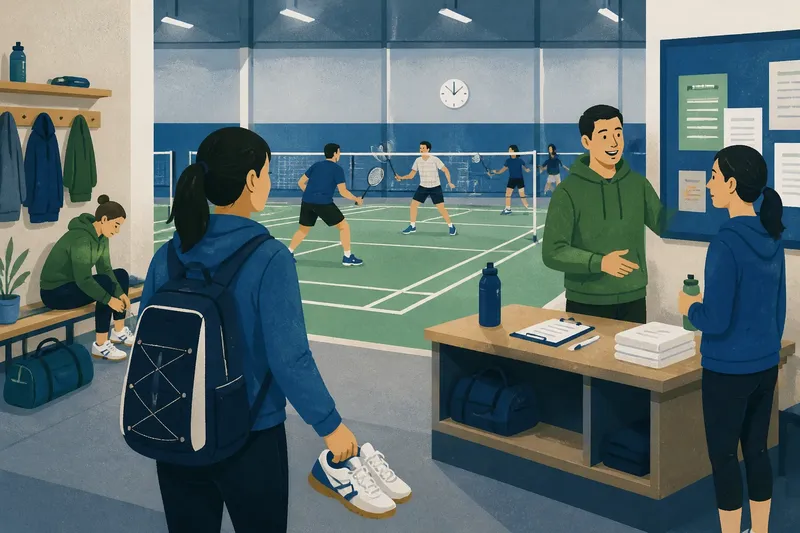
Imagine you played recreational badminton before taking a break because evenings became difficult. You message the club organiser, confirm that the Saturday session is open, and ask a former doubles partner to meet you at the door. You bring your racquet and water bottle, greet the organiser, and join the warm-up; the expected result is that you know where to go and who to ask, even if the first games feel unfamiliar.
What makes returning to sport feel manageable?
What should you say when you return to a club?
Keep it brief and truthful: “I’ve been away for a bit, and I’m ready to join in again.” If the coach needs more detail to place you in a group or adapt an activity, share only the information relevant to that decision. You can keep personal circumstances private.
What if you feel nervous before the first session?
Choose one concrete task for arrival, such as finding the organiser or putting your kit beside the court. A small action gives your attention somewhere useful to go while the nerves settle. If the anxiety feels overwhelming or persists beyond the club setting, consider speaking with a qualified professional.
Should you join the full session straight away?
Ask the coach what the session involves and explain that you are returning after a break. You can agree on a suitable way to take part, such as joining the warm-up and watching a drill before deciding whether to continue. If you have an injury or health concern, seek advice from a qualified health professional before resuming strenuous activity.
What if the club has changed while you were away?
Ask about changes to the venue, group, equipment or session format before you travel. If the current arrangement no longer suits you, ask the organiser about another session or a different role in the club. Returning does not require you to accept a setup that no longer works for you.
Set a boundary for the first session
Decide what you are comfortable doing before the activity begins: you might join the warm-up, try the first drill and then check how you feel. Tell the coach if you need to stop, modify an activity or leave early. A clear boundary helps you participate without pretending to be ready for more than you are.
Suppose you have returned to a local running group after time away and are uncertain about keeping up. You tell the leader before the start, join the easy group and agree to turn back with a named volunteer if the pace feels unsuitable. The observable result is a clear route into the session and a straightforward way to adjust, rather than having to make that decision alone while running.
During the session, ask for the instruction you need instead of apologising for every unfamiliar drill. “Could you show me where to stand?” or “Which part are we doing now?” gives the coach a specific way to help. If you do not understand the answer, ask again before taking part in an activity where confusion could cause a collision or injury.
Decide what connection you want to keep
After the session, notice which part felt welcoming and which part made you hesitate. Perhaps a teammate’s greeting helped, while a crowded changing room made arrival uncomfortable. Use that information to make one adjustment next time, such as arranging to meet outside or asking the organiser to introduce you to the group.
You may decide that your old level of involvement is no longer right. A different session, a social role or occasional attendance can still keep you connected to the sport. If the club’s culture or arrangements do not suit you, looking for another group is a reasonable choice, not a failure to return.
Returning to sport after a break does not require a dramatic announcement or an immediate promise to attend every session. Make contact with one person, confirm what to expect and give yourself a clear way to take part at a comfortable level. The most useful sign of progress may simply be leaving the venue knowing whether you want to come back.